
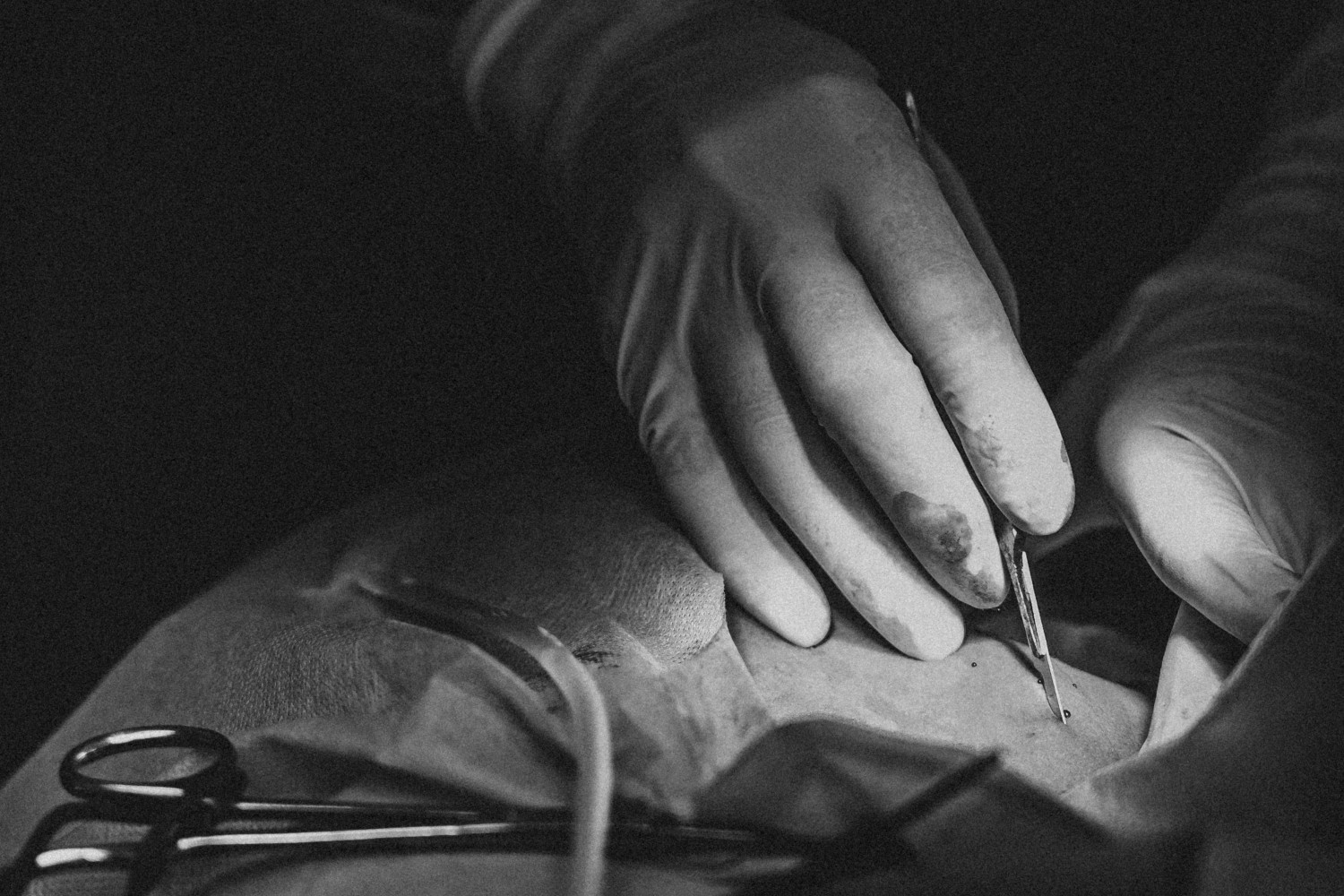
any people imagine surgery as something quick.
They picture a plastic surgeon working fast, moving instruments with great speed.
But in plastic and reconstructive surgery, skill is not about speed.
It is about control.
Skill grows slowly over many years. It involves the hands, but it also involves the mind – careful thinking and good judgment.
In many ways, surgery is like playing a musical instrument. A piano player does not begin with complex music. They practice simple scales again and again. Over time, the fingers learn where to go. The movements become smooth.
Plastic surgeons learn in a similar way.
Skill grows through repetition, patience, and time.
1. Learning the Craft
Training to become a plastic surgeon takes many years.
It begins with medical school. After this comes training in general surgery. Only then does a doctor enter specialist training in plastic and reconstructive surgery.
During these years, young plastic surgeons spend long hours in hospitals and operating theatres. They watch experienced plastic surgeons. They assist in operations. Slowly, they begin to perform parts of procedures themselves.
This training is not rushed.
Plastic surgeons must learn how tissues behave. They must learn how skin stretches and how blood vessels respond. They must understand how wounds heal.
Books can teach the theory. But real understanding comes from experience.
Over time, the hands become steadier. Movements become smaller and more precise.
Skill develops step by step.
2. Skill Is More Than Hands
Many people think surgical skill is only about the hands.
In reality, the mind plays an equally important role.
A plastic surgeon must decide which operation is best for each patient. Sometimes there are several ways to solve the same problem.
Each option has benefits and risks.
A plastic surgeon must think carefully about:
- the patient’s health
- the condition being treated
- the likely healing process
- the long-term result
The best operation is not always the most complex one.Often, the best choice is the safest and most reliable.
Good judgment develops with experience.
3. Training the Eye and the Hand
Plastic surgery often involves very delicate structures.
Plastic surgeons work with skin, fat, muscle, nerves, and blood vessels. These tissues must be handled gently.
Small differences can matter a great deal.
Plastic surgeons train their hands to move with great precision. They also train their eyes to notice very small details.
In microsurgery, plastic surgeons repair blood vessels and nerves using a microscope. These structures can be only a few millimetres wide.
The stitches used are finer than human hair.
To perform this work, plastic surgeons must develop extraordinary control of their hands.
The movements are slow and deliberate. Each stitch is placed with care.
4. Experience Improves Outcomes
In plastic surgery, experience matters.
Over time, plastic surgeons begin to recognise patterns. They learn how different tissues behave. They understand how swelling affects healing and how scars change over months and years.
This knowledge helps guide treatment.
An experienced plastic surgeon may adjust an operation in small ways that are not obvious to others. These adjustments can help tissue heal better and reduce complications.
Experience also prepares plastic surgeons for unexpected situations during surgery.
No two operations are exactly the same. Even familiar procedures can present new challenges.
Experience helps plastic surgeons respond calmly and thoughtfully when this happens.
5. Knowing When Not to Operate
One of the most important skills in medicine is knowing when surgery is not the best option.
Patients sometimes believe that surgery will solve every problem. This is not always true.
Some conditions improve with time. Others can be treated safely without surgery.
Good care always begins with careful evaluation.
A plastic surgeon must listen closely, examine the patient carefully, and consider all possible options.
Sometimes the safest decision is to wait.
Restraint can be an important part of good surgical care.
The famous physician Sir William Osler once said:
“The good physician treats the disease; the great physician treats the patient who has the disease.”
Plastic surgeons must remember this principle. The goal is always to help the patient—not simply to perform an operation.
Stillness, Skill, and Time
The public often sees only the final stage of surgery.
They see the operation itself.
What they do not see are the many years of learning that make that moment possible.
Surgical skill does not appear suddenly. It develops slowly through training, observation, repetition, and experience.
Plastic and reconstructive surgery has always valued patience.
The best results often come from thoughtful planning and careful execution.
Like many crafts, surgery rewards those who are willing to work slowly and carefully.
Skill grows quietly.
And with time, it continues to deepen.
As we move through the year, I often reflect on how closely medicine mirrors life itself.
Many worthwhile things cannot be rushed. Healing takes time. Learning takes time.
Trust grows slowly, through careful attention and patience. It is a privilege for me and my team to care for people at moments when they are vulnerable and hoping for restoration.
We remain grateful for the trust my patients place in us, and we wish each of you steady health, calm days, and the quiet reassurance that good care—like good healing—unfolds thoughtfully over time.
